

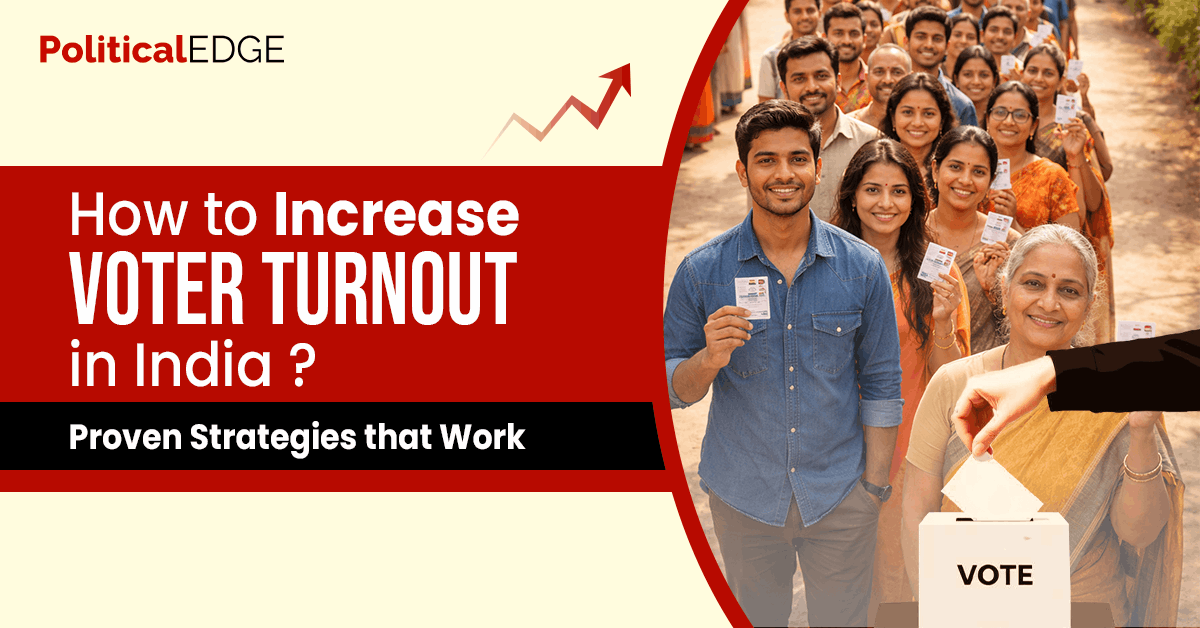
How to Increase Voter Turnout in India: Proven Strategies That Work
With every new election season in India, one pattern that always remains on headlines is, lower-then-expected-voter-turnout. Debates on social media platforms grow loud, young voters express their mixed feelings, and urban areas often face low excitement about voting. Together, these trends point to one truth, India’s democracy is strong, but participation still has room to grow. At this moment it becomes necessary to discuss the points about what actually works to improve Voter turnout in India.
The following blog will reveal the 7 most effective points to increase voter engagement and participation in elections.
1. Voter Engagement Survey
- Voter engagement surveys work as the most powerful way to understand how actively citizens feel connected to the voting process.
- Through these surveys political leaders can identify what motivates people to vote, what discourages them, and what kind of support they need to participate confidently in elections.
- Whether it’s about improving communication, simplifying procedures, or boosting transparency, the results of these voter engagement surveys allow policymakers to create solutions that make the voting process easier, safer, and encouraging for every voter.
2. Voter Awareness Email Campaigns
- To remind voters about upcoming elections and motivate them to participate, Email campaigns play a crucial role. Through these emails political leaders can share essential details such as polling dates, nearby voting locations, required documents, voting hours, making it easier for voters to plan their visit, and also increase voter engagement.
- By combining clarity, timely reminders, and messages that highlight the value of civic participation, these campaigns become a powerful political strategy that can significantly boost voter turnout and contribute to overall political campaign success.
3. Youth-Focused Campaigns
- Keeping the fact in mind that India has the highest number of youth population, specific political strategies work best to increase youth voter engagement.
- Use relatable content formats like short videos, memes, and campus interactions.
- Encourage first-time voter clubs in colleges.
- Involve creators, entrepreneurs, and sportspersons who influence youth culture.
4. Enhance Voter Accessibility
- The philosophy of voter engagement is rooted in convenience. When polling locations are easily accessible and welcoming, they naturally influence voter turnout.
- In today’s fast-paced world, people are deeply occupied with their daily commitments, so proximity to polling stations, adequate parking, and comfortable waiting areas can significantly improve participation. These thoughtful infrastructural improvements not only encourage citizens to vote but also contribute to overall political campaign success.
5. Corporate & Institutional Participation
- Office timing becomes the major barrier for corporate employees, when it comes to voting participation. Political leaders need to actively involve companies and institutions in strengthening voter turnout.
- When workplaces support early leave, staggered shifts, or short voting breaks, it automatically increases voter turnout.
- Such initiatives not only boost civic engagement but also showcase responsible corporate citizenship, turning the workplace into a contributor to political campaign success and smarter political strategy.
6. Transparent Communication with Voters:
- Trust is always the top priority, whether in an election or any public-facing initiative, if you want to win people’s confidence. Political leaders must focus on transparent communication with voters.
- Addressing every smallest concern, maintaining a visible public presence, and engaging in regular conversations with citizens help build genuine trust. And that trust ultimately leads to political campaign success.
When leaders speak with honesty, listen with intent, and show up consistently, trust becomes their strongest campaign.
7. Continue to Engage Post-Election:
- Elections are a good chance to boost civic participation, but a political leader should continue that connection even after the polls close. After the election, reaching out to voters and guiding them on how to stay involved in local government helps maintain long-term engagement.
- This ongoing communication becomes an essential part of any political campaign, strengthening public trust and keeping people updated on community initiatives. Staying connected with voters post-election is a smart political strategy that supports overall political campaign success in the future.
In Conclusion:
Voter turnout in India is never driven by a single factor. It improves when a political leader builds trust, stays visible, addresses citizens’ concerns, and runs a supportive, people-focused political campaign. When leaders follow these approaches as a thoughtful political strategy, and genuinely work to earn the public’s confidence, they create an environment where citizens feel comfortable, valued, and motivated to participate. This ultimately leads to higher voter turnout and contributes to overall political campaign success.
FAQs
1. How can a political leader increase voter turnout among ages 18–24?
A. A political leader can boost turnout among 18–24-year-olds by using youth-focused political campaign strategies, such as campus outreach, social-media content, relatable messaging, and clear guidance on voter registration. When young voters feel represented, they participate more actively.
2. What is the most effective political strategy to increase young voter turnout in India?
A. The most effective political strategy is to meet young people where they are, online. Combining digital engagement, issue-based communication, and interactive events helps inspire confidence and encourages first-time voters to show up on election day.
3. How can political campaigns build trust and improve voter turnout?
A. A political campaign can improve turnout by focusing on transparency, consistent communication, and addressing real local issues. When leaders listen actively and respond honestly, voter trust grows, leading to higher participation.
4. Why is voter turnout low among young voters, and how can political leaders fix it?
A. Low turnout often happens due to lack of awareness, motivation, or trust. A political leader can fix this by simplifying the voting process, offering clear information, and creating youth-friendly engagement platforms through schools, colleges, and social media.
5. What are some proven political campaign strategies to boost overall voter turnout in India?
A. Proven political campaign strategies include door-to-door outreach, flexible voting awareness drives, local community meetings, consistent issue-based communication, and using data-driven insights to connect with different voter groups.
6. How does trust impact political campaign success and voter turnout?
A. Trust is directly tied to political campaign success. When people believe in the intentions and actions of their leaders, they are more likely to vote. Consistent visibility, problem-solving, and honest communication help build this trust.
7. What role does social media play in increasing voter turnout among young Indians?
A. Social media plays a major role in reaching young voters quickly. Creative videos, reels, Q&A sessions, and influencers can simplify political messaging and motivate young people to participate in the democratic process.
